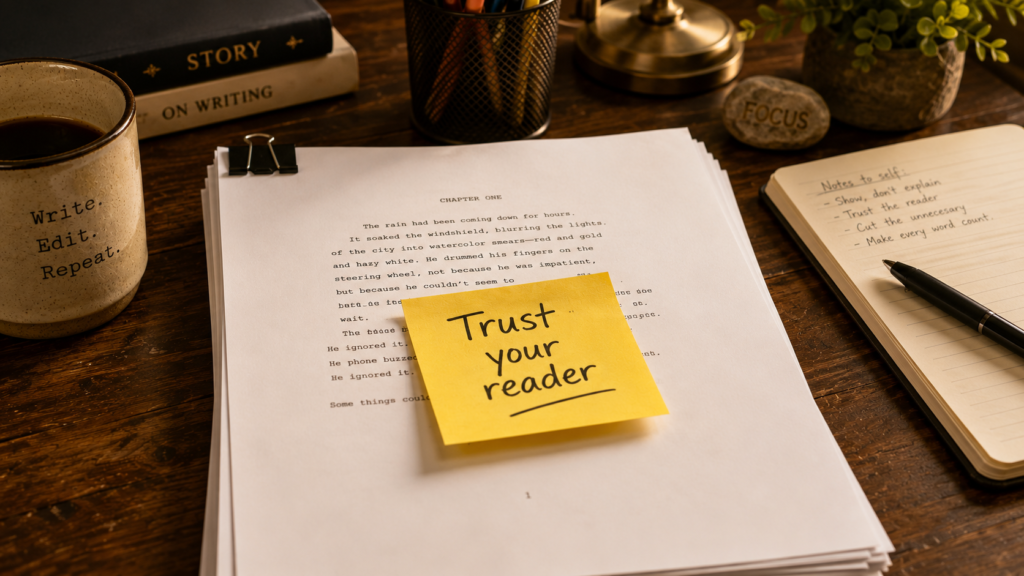
One of the most common comments I leave while editing a manuscript is surprisingly short.
Trust your reader.
Writers work hard to make sure readers understand what’s happening. That’s a good instinct—until we overdo it.
A character storms out of the room and slams the door. Then we write that everyone in the room realizes she’s angry.
Well… yes.
A detective notices a clue we’ve carefully described. Then we explain why it’s important, even though the reader figured it out two paragraphs ago.
Or my personal favourite: a character makes a sarcastic comment, followed immediately by another character explaining that it was sarcasm.
Really?
Readers are smart. They’re putting the puzzle together as they go. In fact, one of the great pleasures of reading is making those connections yourself. When we explain every emotion, every joke, every clue, and every motivation, we accidentally take that pleasure away. We stop inviting readers into the story and start lecturing them about it.
That doesn’t mean you should be cryptic for the sake of being mysterious. Clarity still matters. But clarity and over-explanation aren’t the same thing.
If you’ve done your job—if the scene, dialogue, and action all point in the same direction—have a little faith. Your reader is probably already there.
Sometimes the strongest sentence an editor can write in the margin isn’t a long explanation. It’s just three words.
Trust your reader.
— Mark