fiction writing

Character, Scenes, Setting

Why Your Scene’s Setting Matters More Than You Think

Setting isn’t wallpaper. It’s the emotional engine under every scene you write. A confession uttered beneath stained-glass saints is a completely different moment than one whispered in the soft half-light of a bedroom — same words, wildly different meaning. If a scene feels limp, nine times out of ten the setting is the culprit. Make the room work just as hard as the characters, and suddenly the whole story sharpens.

Character, Dialogue, Voice

Mind Your @#$%& Mouth: Swearing in Fiction (And How Not to Mess It Up)

Writers love to worry about swearing — usually more than their characters do. The truth? Profanity isn’t “good” or “bad.” It’s a tool. A sharp one. Used well, it cuts cleanly through tension, reveals character, or snaps a moment into focus. Used poorly, it just bleeds all over the page.
In this post, Mark breaks down when swearing works, when it absolutely doesn’t, how genre affects your choices, and why every curse word has to be earned. If your characters are going to swear, make sure they mean it.

Voice

Trust Your Readers (They’re Smarter Than You Think—Usually)

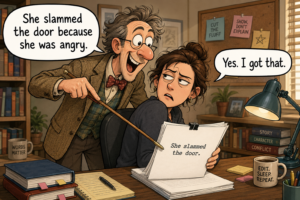
Readers aren’t toddlers in need of hand-holding—they’re highly skilled story-decoders who’ve been reading between the lines since grade school. They don’t need your theme underlined, highlighted, and surrounded by interpretive dance. In fact, the moment you over-explain, you kill the magic. Trust them to catch the subtext, feel the tension, and assemble the clues. Not only will your story be stronger for it—your readers will love you for letting them play along.

Character

The Power of Knowing Your Character’s Arc (Before You Start Writing)

Writing a story without understanding your main character’s arc is like driving cross-country blindfolded — you might arrive somewhere, but odds are it won’t be where you meant to go. Every protagonist travels an emotional and psychological path, changing (or refusing to change) because of the story’s events. When you understand that inner journey — and how it collides with the outer, plot-driven one — every scene gains purpose, every choice deepens meaning, and your rewrite count drops dramatically. Know your hero’s lie, the truth they need to learn, and what the story will throw at them to force that transformation. Everything else flows from there.Is this conversation helpful so far?

Character, Conflict

The Bigger They Are…

A “reasonable” villain might seem believable—but it’s also the fastest way to kill tension in your story. The best antagonists aren’t fair opponents; they’re towering, terrifying forces that make the hero dig deep and evolve. From Goliath to the Borg, it’s the impossible odds that make victory unforgettable.

Character, Conflict

The Two Sides of Conflict: Why Your Story Needs Both

Conflict is the heartbeat of fiction—but not all conflict is created equal. External conflict drives your plot forward, while internal conflict drives your character’s growth. When you make those two forces feed each other, your story hits harder and lingers longer.

Character, Plotting

If You’re Not Crying, You’re Doing It Wrong

Writing fiction should make you feel something. If you’re not laughing, crying, or at least smirking at your own words, your readers won’t either. Emotional resonance starts with the writer. From cardboard characters to scenes that don’t belong, here are five reasons your story might be falling flat—and what to do about it.

Character

The Antagonist Doesn’t Think They’re the Bad Guy

A great antagonist isn’t a cartoon villain twirling a mustache—they’re someone who truly believes they’re right. The most compelling conflicts come when your villain’s goals clash with your hero’s in ways that feel uncomfortably relatable.

Blog, Dialogue

One Simple Trick to Make Your Dialogue Instantly Stronger

Struggling with clunky conversations or over-the-top dialogue tags? Clean, compelling dialogue doesn’t just sound real — it works hard to reveal character, build tension, and move your story forward. Here’s how to write dialogue that earns its place on the page.

Scroll to Top