Editing

Editing

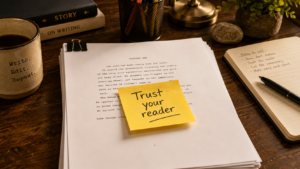
Trust Your Reader

Readers are smarter than many writers give them credit for. When we explain every emotion, clue, or joke, we take away one of reading’s greatest pleasures: discovering the story for themselves. Sometimes the best editing advice is also the simplest—trust your reader.
Editing

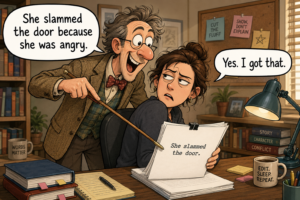
When the Writer Has Already Explained It

Readers are remarkably good at putting two and two together. Yet many writers, worried that a character’s emotions or motivations might not be obvious enough, add a sentence explaining what the reader has already understood. Those explanations rarely add clarity—they usually weaken the scene. Here’s how to recognize when you’re explaining the obvious, and when an explanation genuinely earns its place.

Editing

Why Good Writing Is Usually Rewriting

Most writers love writing but dread rewriting. Yet revision isn’t evidence the first draft failed—it’s where good stories become great ones. Like weeding a garden, editing isn’t about destroying what you’ve grown. It’s about giving the best parts room to flourish.

Editing

Your Editor Isn’t Waiting—And That’s a Good Thing

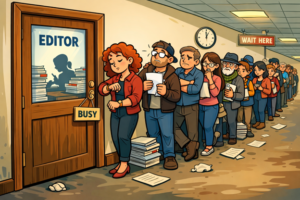
If you’re waiting until your manuscript is finished before thinking about editing, you’re already behind. Editors don’t work on demand—they book weeks or months in advance to give every project the attention it deserves. The writers who stay on track? They treat editing as part of their production pipeline, not the final step.

Editing

The Difference Between Revising and Editing

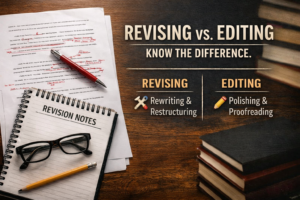
Many new writers use the words revision and editing as if they mean the same thing. They don’t. Revision is where you reshape the story itself—rewriting scenes, adjusting structure, and strengthening the core narrative. Editing comes later, once the story works, and focuses on polishing the language so the manuscript reads clearly and smoothly.

Editing

Before You Send Your Manuscript to an Editor

Typing “The End” feels like the finish line—but it’s actually the start of the next phase. Before you send your manuscript to an editor, there’s important work to do first. Let the story rest, read it again with fresh eyes, fix the obvious issues, and understand what type of editing your book really needs. The more polished your manuscript is before it reaches an editor, the more valuable—and effective—the editing process will be.

Editing

Why Good Editing Feels Invisible

Good editing doesn’t draw attention to itself. When it works, readers never notice it at all — they simply fall into the story. Editing isn’t about rewriting an author’s voice or showing off clever fixes. It’s about removing the friction that causes readers to hesitate, lose momentum, or quietly stop turning pages.

Editing

Your Editor Can’t Fix This (And You’re Paying Them To Try)

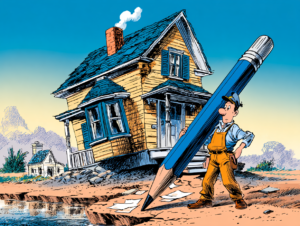
Writers sometimes send manuscripts to an editor hoping the edit will “make it work.” But when the foundation of the story is cracked — weak character arcs, passive scenes, or conflict happening offstage — no amount of line editing can fix it. Editing refines what already works; it doesn’t rebuild the structure. Knowing the difference can save writers money, frustration, and a lot of misplaced hope.

Editing, Miscellaneous

Why Dictated Manuscripts Require a Different Kind of Edit

Dictation can capture the natural rhythm and momentum of storytelling—but spoken language doesn’t always translate cleanly to the page. Here’s why dictated manuscripts need a different editorial approach, and how careful editing preserves the author’s voice while shaping it into clear, compelling prose.

Editing

The Editing Queue Just Filled Up

If you’ve been thinking, “I should probably get a quote…” — this is your nudge. Editing queues don’t fill in tidy rows; they arrive in waves, overlap, and shift. And once the calendar is full, the only honest answer for new clients is: your start date will be later than you hoped.

Editing

Five Things Editors Wish Writers Knew

After you’ve been editing fiction for a while, patterns emerge — not in the stories, but in the expectations writers bring to the process. Editing isn’t about fixing broken books or policing commas. It’s about helping a manuscript work the way the author intended: with clarity, emotional logic, and structural strength. Here are five things editors quietly wish every writer understood before the red pen ever comes out.

Scroll to Top