Editing

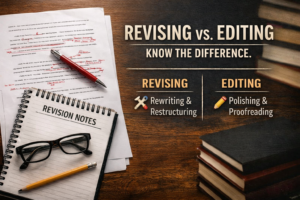
The Difference Between Revising and Editing

Many new writers use the words revision and editing as if they mean the same thing. They don’t. Revision is where you reshape the story itself—rewriting scenes, adjusting structure, and strengthening the core narrative. Editing comes later, once the story works, and focuses on polishing the language so the manuscript reads clearly and smoothly.

Editing

Before You Send Your Manuscript to an Editor

Typing “The End” feels like the finish line—but it’s actually the start of the next phase. Before you send your manuscript to an editor, there’s important work to do first. Let the story rest, read it again with fresh eyes, fix the obvious issues, and understand what type of editing your book really needs. The more polished your manuscript is before it reaches an editor, the more valuable—and effective—the editing process will be.

Openings, Structure

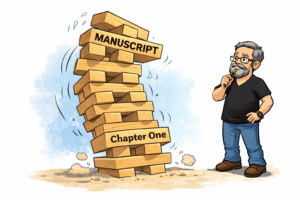
Why Most Manuscripts Fail in Chapter One

Most manuscripts don’t fail because the author lacks talent—they fail because Chapter One doesn’t do its job. Chapter One isn’t a warm-up, a weather report, or a backstory dump. It’s a promise to the reader about what kind of story they’re about to experience. If nothing is off-balance, nothing is at risk, and nothing is changing, the reader is left asking the most dangerous question in fiction: Why am I here?

Editing

Why Good Editing Feels Invisible

Good editing doesn’t draw attention to itself. When it works, readers never notice it at all — they simply fall into the story. Editing isn’t about rewriting an author’s voice or showing off clever fixes. It’s about removing the friction that causes readers to hesitate, lose momentum, or quietly stop turning pages.

Editing

Your Editor Can’t Fix This (And You’re Paying Them To Try)

Writers sometimes send manuscripts to an editor hoping the edit will “make it work.” But when the foundation of the story is cracked — weak character arcs, passive scenes, or conflict happening offstage — no amount of line editing can fix it. Editing refines what already works; it doesn’t rebuild the structure. Knowing the difference can save writers money, frustration, and a lot of misplaced hope.

Editing, Miscellaneous

Why Dictated Manuscripts Require a Different Kind of Edit

Dictation can capture the natural rhythm and momentum of storytelling—but spoken language doesn’t always translate cleanly to the page. Here’s why dictated manuscripts need a different editorial approach, and how careful editing preserves the author’s voice while shaping it into clear, compelling prose.

Editing

The Editing Queue Just Filled Up

If you’ve been thinking, “I should probably get a quote…” — this is your nudge. Editing queues don’t fill in tidy rows; they arrive in waves, overlap, and shift. And once the calendar is full, the only honest answer for new clients is: your start date will be later than you hoped.

Editing

Five Things Editors Wish Writers Knew

After you’ve been editing fiction for a while, patterns emerge — not in the stories, but in the expectations writers bring to the process. Editing isn’t about fixing broken books or policing commas. It’s about helping a manuscript work the way the author intended: with clarity, emotional logic, and structural strength. Here are five things editors quietly wish every writer understood before the red pen ever comes out.

Plotting, Suspense

Cliffhangers

Readers don’t actually hate cliffhangers.
They hate being cheated.

What they’re reacting to isn’t tension or anticipation—it’s a broken promise. An ending that withholds resolution, slices a single story into artificial chunks, or stops mid-thought without delivering what the book itself set up isn’t a cliffhanger at all. It’s a contract breach.

A real cliffhanger resolves the story you promised to tell—and then opens the door to the next problem. It creates momentum, not confusion. When done right, the reader doesn’t feel tricked. They feel hooked.

Miscellaneous

Anyone Quoting Black-and-White “Rules” About Writing Is Full of Crap

If someone is handing you absolute, black-and-white “rules” about writing, they’re full of crap.
Most of those commandments started life as reasonable cautions… before nuance died somewhere between a conference panel and a poorly edited podcast rant.

Real editors don’t enforce rules.
Real editors ask one question: Is this working for this story, this audience, this moment?

Follow every so-called rule perfectly and you won’t write a great book — you’ll just write a technically correct, emotionally flat one.
Rules can stop you from making mistakes.
They cannot help you make choices.
And writing is nothing but choices.

The Writing Life

The Annual Ritual of the Writing Resolution

Writing resolutions fail for remarkably predictable reasons.
Not because writers are lazy or unserious—but because they aim too high, too vaguely, and too emotionally.

The writers who finish books aren’t the ones who promise themselves a perfect year.
They’re the ones who build systems that survive imperfect weeks.

Christmas scene with books 2
Miscellaneous

An Editor’s Christmas List (For His Writers)

What editors want for Christmas isn’t polish, perfection, or vibes—it’s finished books, clear storytelling, and writers who trust their readers enough to be specific and brave. An editor’s wish list for writers who want stronger stories, better partnerships, and a publishing year that actually gets books across the finish line.

Scroll to Top